







Tag Archives: MSG

National Basketball Retired Players Association Gala during NBA All Star Week

About the NBRPA
THE NATIONAL BASKETBALL RETIRED PLAYERS ASSOCIATION

Founded in 1992 by NBA Legends Dave DeBusschere, Dave Bing, Archie Clark, Dave Cowens and Oscar Robertson, the National Basketball Retired Players Association (NBRPA) is a non-profit association comprised of former professional basketball players of the NBA, ABA, Harlem Globetrotters, and WNBA. We are the only alumni association of its kind supported directly by the NBA and National Basketball Players Association (NBPA).

MISSION STATEMENT

The National Basketball Retired Players Association is a charitable 501(c)3 non-profit organization with a two-pronged mission to assist former NBA, ABA, Harlem Globetrotters and WNBA players in their transition from the playing court into life after the game, while also positively impacting communities and youth through basketball.

ABOUT THE NBRPA

With energetic corporate leadership and a unified Board, the future has never been brighter at the NBRPA. Now more than 20 years old, the Association provides a host of programs, services and benefits designed to help retired basketball players and their families successfully navigate life after the game. In support of its membership, the NBRPA proactively offers a full menu of education, health, finance and career/life transition benefits to retired basketball players and their families.

Working in conjunction with the NBA and NBPA, the NBRPA’s membership promotes basketball and enhances the sport’s image by building community relationships and fostering support for charitable activities and philanthropic events with a connection to the game.

By playing in the NBA, ABA, WNBA or with the Harlem Globetrotters, NBRPA members helped build the game of basketball and – through the distinction of an on-court professional career at the sport’s highest levels – remain ambassadors to the game for life. NBRPA members embody the game long after taking the court professionally and put their notoriety to positive use as spokespersons and conduits of good will in the basketball community.

Kevin “Flushing Flash”,Kelley WBC Featherweight World Boxing Champion-2014

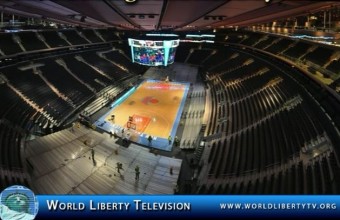
Three Phases of Transforming Madison Square Garden , in the World’s Greatest arena, 2013

The three-year historic Transformation of Madison Square Garden was officially completed on October 24th, 2013, providing a significantly enhanced experience for customers, athletes, entertainers, suite holders and marketing partners, from the fist row to the last. The transformed Garden is expected to attract even more high profile sports and entertainment events, major concerts and awards shows, as well as provide new and unique opportunities for marketing partners to drive their business objectives.

The project’s architect is Brisbin Brook Beynon, Construction Manager is Turner and Project Manager is JLL. Extensive research and focus groups were conducted and the feedback was used to develop the plans for the Transformation. The project involved over 2.6 million man hours of union labor, the equivalent of at least 1,300 full-time jobs, creating as many as 3,700 union construction jobs. An estimate of 2,851 tons of steel was used in the completion of the project. There is a 22% increase in the number of restrooms now available, as well as a 26% increase on concessions offered. The number of suites increased from 89 to 96 and both the Madison and Garden Concourses, as well as the Chase Square have more than doubled in size. For the Chase Bridges, 880 steel pieces were used for their erection and a total of 150 yards of concrete was installed.

The Transformation Project consisted of three phases, one phase for each year of construction.
Phase I of the Garden Transformation debuted for the 2011-12 season and included new Lower Bowl seating area, an expanded Madison Concourse, 20 new Nespresso Event Level Suites, New Delta Sky360 Club, New 1879 Club, open areas on the Garden Concourse and new West Balcony and new Knicks and Rangers locker and dressing rooms.
Phase II of the Transformation debuted for the 2012-13 season and included new Upper Bowl seating area, expanded Garden Concourse with city views and more restrooms, new Lexus Madison Suite Level, new all-inclusive Madison Club, return of the beloved Blue Seats and homages to The Garden’s storied history on the Madison Concourse with new “Garden 366” and “Defining Moments” exhibits.
Phase III, which marks the completion of the Transformation debuted for the 2013-14 season and included a doubled in size new Chase Square 7th Avenue entrance, 2 new first-of-their-kind Chase Bridges, new EIGHTEEN/76 Balcony, new state-of-the-art GardenVision, new Signature Suite Level and restoration of the iconic Garden ceiling.

Madison Square Garden Unveils Completely Transformed Arena, 2013

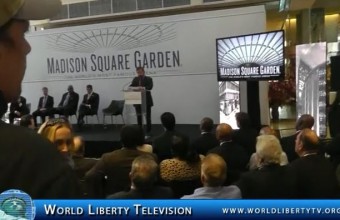
Madison Square Garden unveils a completely transformed arena reopening just in time for the Knicks Pre-Season Game. October 24th, 2013 marked the completion of Madison Square Garden’s three-year, top-to-bottom Transformation, which significantly enhanced every aspect of the historic Arena, from the first row to the last. The completed Transformation, which has been designed to improve the experience of fans, partners, suite holders, athletes and entertainers, was unveiled at a star-studded, standing-room-only press event in the Garden’s re-imagined 7th Avenue entrance, Chase Square.

Featured at the event were New York Governor Andrew Cuomo, The Madison Square Garden Company’s Executive Chairman, Jim Dolan and its President and Chief Executive Officer, Hank Ratner. Also on hand for the unveiling were Knicks legend, Willis Reed and New York Rangers’ great, Mark Messier, among many others.

Madison Square Garden’s self-funded, $1 billion, comprehensive Transformation saw the Garden shut down for three consecutive off-seasons (2011, 2012, 2013,) with construction continuing behind-the-scenes during a full slate of NBA and NHL games, sold-out concerts and other sporting and entertainment events.

The newly transformed Arena boasts new additions such as First-Class food offerings, a “Defining Moments” special exhibit honoring MSG’s unparalleled history, and restoration on the corridors on the entry level of the Arena to replicate the look of the building when the doors first opened 45 years ago. The 1968 North and 1968 South corridors not only replicate the floors, walls, ceiling and lighting of the original Garden, but also feature authentic advertisements and event promotional posters from that commemorative year. New first-class culinary additions include offerings from some of the world’s greatest chefs such as Jean-Georges with Cocina Tacos. Two other restaurants to join The Garden’s unrivaled lineup of food options include La Esquina and Casa Nonna. In homage of Madison Square Garden’s illustrious 134 year history, the remaining 10 “Defining Moments presented by SAP” exhibit will feature special photo displays and memorabilia throughout the Arena that showcase some of the moments that have solidified The Garden’s position as The World’s Most Famous Arena.

An estimate of 2,851 tons of steel was used in the completion of the project. There is a 22% increase in the number of restrooms now available, as well as a 26% increase on concessions offered. The number of suites increased from 89 to 96 and both the Madison and Garden Concourses, as well as the Chase Square have more than doubled in size. Fans will see a return of the 1,000 beloved Blue Seats that were removed in 1990. For the Chase Bridges, 880 steel pieces were used for their erection and a total of 150 yards of concrete was installed. The new state-of-the-art GardenVision, the Arena’s center-hung multimedia display saw an increase from 1,120 square feet to 3,400.

In addition to signaling a new era for the celebrated venue, the Transformation of Madison Square Garden was an important source of union jobs during a difficult time in both the local and national economies. Supported by the Building and Construction Trades Council, the project created 3,700 union construction jobs and required 2.6 million man hours of labor. The project’s architect is Brisbin Brook Beynon, Construction Manager is Turner and Project Manager is JLL.