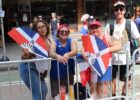









BY: Liliana Rocio, Senior Editor for World Liberty TV, @ 37th Ave & 69th St Queens NY, Sun Aug 16 2026
Once a year, the Bolivian Day Parade fills 37th Avenue in Jackson Heights, Queens with elaborate costumes, live bands, and folk dance ensembles carrying centuries of Andean and Bolivian tradition down the street in full color.
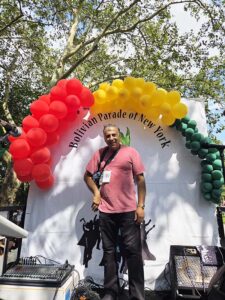
Dr Adal at the Bolivian Parade Float
Celebrates Bolivian heritage in folk dance, music, and dress Indigenous, Spanish colonial, and African roots.
With Japanese and Lebanese migrant influences at 37th Avenue | 69th to 89th St
Jackson Heights, Queens Sun, August 16, 2026 , 12:00pm to 3:00pm and its free to attend.
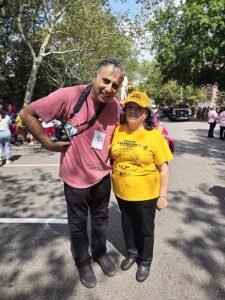
Dr Adal with Maria Maggie Amurrio of Maggies Magic Garden
The Bolivian Day Parade runs along 37th Avenue between 69th Street and 89th Street, cutting straight through the heart of Jackson Heights, one of the most diverse neighborhoods in New York City.
The parade is a showcase for Bolivia’s folk dance tradition, a living record of the country’s Indigenous, Spanish colonial, and African influences.
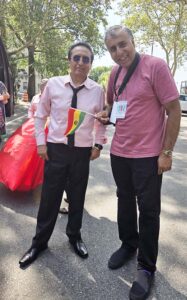
Dr Adal with Vladimir Cespedes President CPBS Inc
Dancers typically perform in the elaborate costumes associated with dances like Caporales, Diablada, Morenada, Tinku, and Tobas, each with its own rhythm, story, and regional roots in Bolivia.
Look for some Cholitas, women from the Andean highlands, who wear traditional polleras (multi-layered skirts), colorful woven mantas or aquayos (shawls), and bombines (bowler hats).
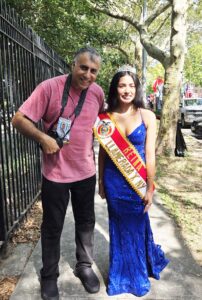
Dr Adal with Bolivian Beauty Queen
Listen for rhythms of the Charango, small Andean guitar (traditionally made from armadillo shells), and melodies from zampoñas or quenas pan and wooden flutes (often heard in New York subways and squares).
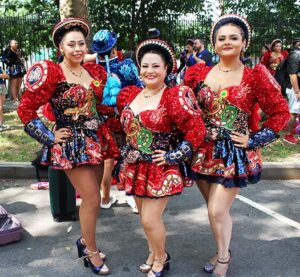
Bolivian Dancers well dressed
Marching bands, community organizations, and dance academies from across the New York area take part, turning the avenue into a multi-hour procession of music and movement.
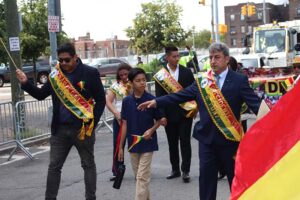
President of Bolivan Day Parade marching with his officers
It’s a rare chance to see Bolivian culture presented on its own terms, in a neighborhood where that culture lives year-round.
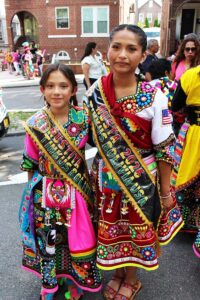
Bolivian Beauty Queens
Bolivia takes its folk dancing seriously, including causing diplomatic incidents with Peru or Chile for what Bolivians consider to be cultural appropriation without recognition.
It’s an unfortunate legacy of colonial borders which divided the same people, but the point is that Bolivians take their dancing seriously.
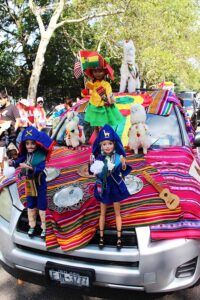
Best Bolivian Decorated car in the Parade
Carnaval de Oruro and Fiesta del Gran Poder are some of the world’s most vibrant cultural festivals. They blend Catholic and Indigenous spiritual beliefs.
Caporales: Created in the 1960s, this high-energy dance features athletic jumps, kicks, and stomping.
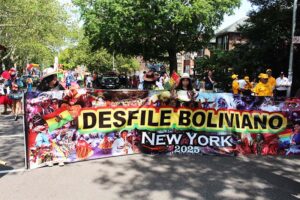
Bolivian Parade 2026
Dancers wear high-heeled boots adorned with jingle bells (cascabeles) that ring in sync with the rhythm. You see a lot of caporales in New York.
La Diablada (Dance of the Devils): A theatrical dance depicting the battle between good and evil (Archangel Michael vs. the Devils). Famous for its elaborate, oversized demon masks, dragon headpieces, and embroidered capes.
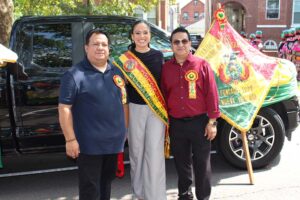
Comite Vivico Cultural Boliviano de Nueva York Marching
Good vs Evil is a common theme in Caribbean and Latin American carnival traditions.
Everybody has their own spin on it and some of the costumes are wild. Parents everywhere tease their young children with threats that the devils will come after them if they are bad. It’s a very human thing.
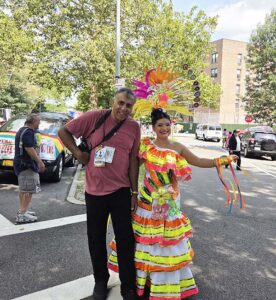
Dr Adal with a lady dressed in Bolivian Style outfit
Morenada: Known for its slow, heavy rhythm symbolizing the struggle of enslaved Africans brought to work in the silver mines during Spanish colonial rule.
Dancers wear massive, heavy barrel-like costumes and ornate masks.
It’s worth noting that African heritage survives in places where you wouldn’t expect it. We blended in over the generations.
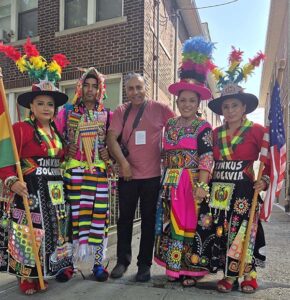
Dr Adal with Tinkus Bolivian Dancers
What we’ve noticed in the Latin world is that regardless of whether African or Indigenous culture dominates today, people of both heritages remember and respect the other.
Tinku: Originating as a ritual encounter in the northern Potosí region, Tinku features fast-paced, warlike movements and lively jumps, performing in traditional hand-woven textiles (aguayos).
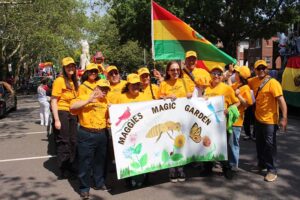
Maggies Magic Garden staff marching
Tobas: A fast, athletic dance representing Indigenous tribes of the Amazon basin, featuring high leaps, spears, and vibrant feathered headpieces.
Kullawada: An ancient Aymara dance of spinners and weavers, distinguished by dancers carrying decorative wooden spindles (kapus) and wearing wide-brimmed decorated hats.
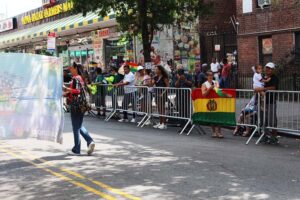
Hundreds of guests enjoying parade
It was our first time covering the Blolivan day parade, in Jackson heights, Queens. It was very colorful many folklore dancers dressed, ready to March and dance in the parade.
Close 3-4 thousand people were in attendance enjoying the festivities, dancers and Bolivian culture.
Many people marching in the parade, came as far as North Carolina, Virgina and beyond. Many community based organizations marched in the parade.
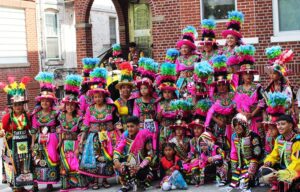
One of the largest Tinkus group dancers
The Bolivian Day Parade is the biggest Bolivian cultural event in NYC, centered in Jackson Heights along 37th Avenue.
It draws Bolivians and Bolivian Americans from across the East Coast for traditional dances, costumes, and music.
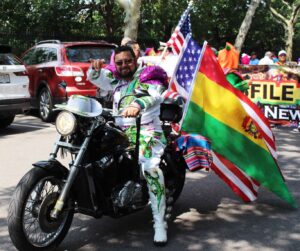
One of many bikers in parade
Past parades have started at noon and run with live entertainment and food nearby at different places
See more about Bolivian Day Parade NYC: Queens Annual Celebration of Bolivian Culture-2026, in our World Liberty TV, Political channels by clicking here.