







Search for: "real estate"

NYU SCHACK INSTITUTE OF REAL ESTATE’S 55TH ANNUAL CONFERENCE ON CAPITAL MARKETS IN REAL ESTATE
NYU Schack Institute of Real Estate’s 55th Annual Conference on Capital Markets in Real Estate Focuses on The Opportunities & Challenges in a Post-Pandemic Inflationary Environment on December 6 at the Pierre Hotel in NYC.
Eric L. Adams, Mayor of New York City, Was the Featured Guest Speaker, Along with Industry Leaders and Speakers Larry Silverstein of Silverstein Properties, Maryanne Gilmartin of MAG Partners, Tammy Jones of BASIS Investment Group, Scott Rechler of RXR, William Rudin of Rudin Management Company, Marty Burger of Silverstein Properties, Paula Campbell Roberts of KKR, Barry Sternlicht of Starwood Capital Group, & and isa Pendergast of CREFC.
The NYU School of Professional Studies (NYU SPS) Schack Institute of Real Estate will host the 55th Annual Conference on Capital Markets in Real Estate at the Pierre Hotel in New York City on Tuesday, December 6, from 8 a.m. to 5 p.m. New York City Mayor Eric Adams is the featured guest speaker.
One of the foremost forums on the state of the commercial real estate capital markets and investment activity for more than half a century, the Conference will once again convene industry leaders for a vigorous debate on global equity and debt capital flows, institutional and private equity investment activity, and emerging sources of market disruption.
WE ARE STILL THE GOLDEN APPLE:Larry A. Silverstein, Chairman, Silverstein Properties
23rd ANNUAL GOLDEN APPLE PANEL :Robert S. Blumenthal, Vice Chairman and Managing Director, Real Estate, Gaming, Lodging, and Leisure Group, Americas Deutsche Bank Securities [Moderator],Marty Burger, CEO, Silverstein Properties, MaryAnne Gilmartin, Founder and CEO, MAG Partners,Scott Rechler, Chairman & CEO, RXR and Bill Rudin, CEO and Co-Chairman, Rudin Management Company.
FIRESIDE CHAT: Discussion of Opportunities and Challenges in a Post-Pandemic Inflationary Environment, James D. Kuhn, President and Head of Investor Services, Newmark, Barry Sternlicht, Chairman and CEO, Starwood Capital Group.
The Conference finished off with CREFC DEBT FINANCE PANEL, RISK MANAGEMENT AND DATA – Using Data to Manage Macro, Financial and Environmental Risk.
It was our first time covering this event, and I have to say the most uplifting encouraging speech I heard was by Larry Silverstein, Billionaire Chairman and founder of Silverstein Properties. He went into detail how he started his company alongside his father and how he bought his first building and went to so many banks that turned him down, and how he eventually got a loan from one of the banks, and built his empire. I was so impressed with Mr. Silverstein’s speech, it touched my heart, keeping in mind he is 91.5 years old as he said in his speech, I did a special video of this speech which you can sit back and watch and learn from one of the greatest real-estate Tycoon in the USA and possibly in the World. You can watch, Billionaire Real Estate’s Tycoon Larry Silverstein’s Keynote Speech at NYU’s Capital Markets Conf-2022 in our World Liberty TV, Business Channels by clicking here.
Close to 300 people were in attendance, with high level panels, great speakers, world leaders in the real estate world and great networking.
About the NYU School of Professional Studies Schack Institute of Real Estate: The NYU School of Professional Studies (NYU SPS) Schack Institute of Real Estate was founded in 1967 at the initiative of prominent members of the New York City real estate community, who encouraged NYU to establish an academic center that would provide a world-class education for industry professionals.
More than 50 years later, the Schack Institute is at the forefront of real estate education and is recognized globally as one of the world’s leading centers of real estate research and pedagogy. Across the Institute’s graduate degree programs—notably the MS in Real Estate, the MS in Construction Management, and the MS in Real Estate Development—as well as a rapidly expanding undergraduate degree program, enrollment has grown to more than 1,000 full- and part-time students from across the United States and nearly 50 other countries. In addition to its flagship degree programs, thousands of working professionals enroll in the Schack Institute’s executive education, diploma, and career advancement programs each year.
An anchor of real estate academia’s engagement with industry, the Institute is home to the REIT Center, the Center for the Sustainable Built Environment, and the newly established Urban Lab. In addition, the Institute hosts national industry events, including annual conferences on real estate capital markets and the REIT sector. Under the direction of the Schack Institute’s faculty, ongoing applied research at the Institute spans an exceptional range of issues in real estate development and investment, urban economics, and market structure and regulation.
See more in our World Liberty TV, Business Channels and Blogs by clicking here.
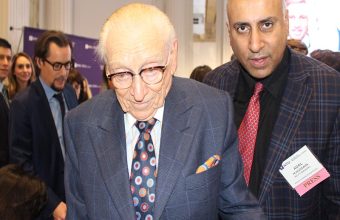
Billionaire Real Estate’s Tycoon Larry Silverstein’s Keynote Speech at NYU’s Capital Markets Conf
At almost 91.5 years of age, Larry Silverstein is one of New York’s premier real estate investors and developers. Well known today throughout the world as the owner of the World Trade Center, Mr. Silverstein has been a notable Manhattan real estate developer for over 50 years. Today, he is the chairman of his company, Silverstein Properties.
Born during the great depression, Larry started from humble beginnings in New York where he would grow up. After obtaining his college degree at NYU, he would marry his wife Klara. Together, they would raise three children.
Son of a leasing broker, Larry was exposed to the business at a young age. With the demands of having to support a family, he took an entrepreneurial leap with his father from brokerage to commercial real estate development and investment.
The risk paid off and after having delivered returns to his fellow investors, more projects ensued. His journey in real estate continued as he acquired, developed, rehabilitated and re-positioned commercial properties in Manhattan entirely on spec.
Born in 1931, Larry Silverstein is the son of Harry Silverstein who was a classically trained pianist, but a commercial leasing broker by trade. Larry was raised and educated in New York. Larry and his sister grew up in the Bedford Stuyvesant neighborhood until moving to the Washington Heights area.
As his father was a classically trained pianist, Larry and his sister would attend the High School of Music and Art. Upon finishing high school, he continued his studies obtaining an undergraduate degree from New York University (NYU). After his college degree, Larry also attended law classes in the mornings at Brooklyn Law School while he worked in the afternoons as a leasing broker.
In 1951, Larry would attend camp where he was tasked to wash the dishes. His boss in the kitchen was a young woman named Klara. After an invitation by her parents for dinner, the two would begin dating and eventually marry. They would have three children together.
The path to the World Trade Center began in 1980 when the Port Authority offered the keystone site up for bid. Larry Silverstein would win the bid to lease the site upon which he would build 7 World Trade Center. Initially engineered for a 25,000 square foot floor plate, Mr. Silverstein knew the local tenants were attracted to larger floor plates that had twice as much square footage.
Larry Silverstein would build 7 World Trade Center on spec with the larger floor plates desired by the larger tenants in the area. He was successful in leasing 1,000,000 square feet of space to Salomon Brothers. Equally important, he now had experience dealing with the Port Authority.
When the Port Authority decided to divest itself from ownership of the World Trade Center, they approached several candidates to submit bids for the office towers. Vornado was initially the successful bidder, but relinquished their successful bid to Larry Silverstein who was more experienced in affairs with the Port Authority.
Larry Silverstein, delivered his keynote speech at NYU Schack Institute of Real Estates 55th Annual Conference on Capital Markets in Real Estate on Tuesday December 6th 2022, at the Pierre hotel, New York City.
See more in our World Liberty TV, Business Channels and Blogs by Clicking here.
3rd Annual GWS & GWI Wellness & Real Estate Communities Symposium
Actor, advocate and humanitarian Richard Gere inspired the room of developers, architects, investors and wellness professionals to “have the humility to genuinely listen to what a community needs.”
Hint: the grandmas usually know. Putting this into practice with his Sierra A Mar project, they are building a resilient and abundant future for CostAlegre that is healthy and equitable.
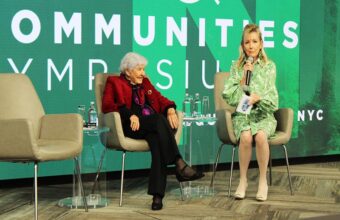
We celebrated the life, legacy and 102nd birthday of the “godmother of wellness,” Deborah Szekely, who sat down with Susie Ellis for a talk on “Longevity for Real!”
Delegates leaned in to her wisdom—a living testament to the benefits of well-living—as she shared, “You have to be open to receive magic.”
The leading conference on the Business of Wellness, The Global Wellness Summit (GWS) is an annual four-day meeting where leaders from business, government, academia and science come together to shape the interconnected world of wellness.
A lightning rod for innovative thinking, ground-breaking research and powerful, productive networking, the Summit joins together the leading minds in the business of wellness and prevention across all eleven sectors of the multitrillion dollar wellness economy.
Held in a different location each year, the GWS is the event where relationships are forged, investments are made, and business gets done.
About The Global Wellness Summit: is the premier organization that brings together leaders and visionaries to positively shape the future of the multitrillion global wellness economy.
Its future-focused conference is held at a different global location each year and has traveled to the US, Switzerland, Turkey, Bali, India, Morocco, Mexico, Austria, Italy and Singapore.
GWS also hosts regular virtual gatherings, including Wellness Master Classes, Wellness Sector Spotlights and Investor “Reverse Pitch” events.
The organization’s annual The Future of Wellness global wellness trends report offers expert-based predictions on the future of wellness. The 2023 Summit will be held in St. Andrews, Scotland in November 2024.
It was our first time covering the Global Wellness Summit, people from all over the world in attendance, came to listen as well as speak in many panels. VIP reception was sponsored by Shop Architects, which took place at the Iconic Woolworth Building, one day before the summit. Totally was a great event and look forward to attending next year.
See More in our World Liberty TV, Health, Wellness and Beauty Channels by clicking here.

Global Wellness Summit’s Wellness & Real Estate Communities Symposium at JPMorgan Chase NY Headquaters-2024

NYU SCHACK INSTITUTE OF REAL ESTATE’S 55TH ANNUAL CONFERENCE ON CAPITAL MARKETS IN REAL ESTATE-2022

Pioneering women in Real Estate Gala Presented by Sokol Media-2016

Sharestates Celebration event at Gotham Hall -2018
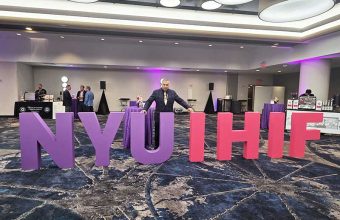
The 48th annual NYU International Hospitality Investment Forum (NYU IHIF)-NYC-2026
Global Hotel Titans from Hilton, Hyatt, Wyndham, IHG and Accor Define Hospitality’s Future at the NYU International Hospitality Investment Forum “CEO Panel”
Hospitality real estate investment leaders and decision-makers unite to drive innovation and identify new deal opportunities; Conference took place on May 31 – June 2nd in New York.
The 48th annual NYU International Hospitality Investment Forum (NYU IHIF), operated by Questex, a leading information services and event company, in partnership with the NYU School of Professional Studies (NYU SPS) and its Jonathan M. Tisch Center of Hospitality, had hospitality leaders from Hilton, Hyatt, Wyndham, IHG and Accor participate on the “Global Hospitality CEO Panel: The View from the Boardroom.” At NYU IHIF which took place on May 31 – June 2 at the New York Marriott Marquis in NYC.
On June 1, Christopher J. Nassetta, President and CEO, Hilton Worldwide; Mark Hoplamazian, President and CEO, Hyatt, Elie Maalouf, CEO, IHG Hotels and Resorts; and Sebastien Bazin, Chairman and CEO, Accor .
Shared boardroom perspectives on market dynamics, emerging trends and strategies for adapting to uncertainty. Sara Eisen, Anchor, Closing Bell, CNBC moderated the panel.
“We are excited to welcome this standout lineup of CEOs. Each brings a unique viewpoint and together they will create a dynamic exchange of ideas.
In this must-attend session, attendees gained insight into how they are shaping the industry,” said Alexi Khajavi, Group President, Living and Hospitality, Questex.
“NYU IHIF has served as a premier gathering for global business leaders, industry influencers and professionals for nearly five decades.
We look forward to convening the hospitality ecosystem to share actionable insights on the industry’s trajectory and to provide rich networking opportunities that foster lasting connections,” said Nicolas Graf, Associate Dean of the Jonathan M. Tisch Center of Hospitality.
Mr Graf will retire this year from his role as Associate Dean of the Jonathan M. Tisch Center of Hospitality. Many people at the conference stood up and gave a very warm round of applause, thanking Mr. Graf for his many years of service, we at World Liberty TV, enjoyed his company for 5 years years an honorable man who did so much for the hospitality industry.
We wish him the best in his next adventure in his life.
Other prominent leaders presenting at NYU IHIF included: David Pepper, Chief Development Officer, Choice Hotels, Satya Anand, Group President U.S., Canada and Latin America, Marriott International, Kevin Osterhaus, President Global Lifestyle Brands, Hilton, Claire Wallace, SVP Acquisitions and Development, Pyramid Global Hospitality.
Omer Acar, CEO Raffles and Fairmont, Accor.., María Zarraluqui, SVP, Global Growth & Owner Relations, Hyatt Inclusive Collection, Jonathan Halkyard, Chief Financial Officer, MGM Resorts International, Scott Strictland, Chief Commercial Officer, Wyndham Hotels and Resorts, and so much more.
Anthony Scaramucci, Founder and Managing Partner, SkyBridge and Founder and Chairman, SALT delivered the keynote address.
Danny Meyer, Founder and Executive Chairman, Union Square Hospitality Group (USHG) received the Jonathan Tisch Active Citizenship Award.
The award celebrates the positive impact and achievements of a leader in the hospitality industry.
“It was an honor to present Danny with the Jonathan Tisch Active Citizenship Award. He is widely respected throughout the hospitality industry and has truly raised the bar with his commitment to prioritizing the experience of both guests and employees.
Additionally, the second edition of BxR – Brand x Residential, which is dedicated entirely to investment, development and strategy within branded residences, was co-located with NYU IHIF for one full day of programming on June 2.
The event will bought together 200 branded residential pioneers and investors to connect, deploy capital and drive developments forward to build iconic branded residences of the future.
Close to 2200 people in attendance, from all over the world in attendance having an involvement in the Hospitality sector, had high level speakers, CEO’s, VIP dinners, Lunches, Receptions throughout New York City, It was the event to be at.
See more about the 48th annual NYU International Hospitality Investment Forum NYC-2026, in our World Liberty TV, Business and Hospitality Channels by clicking here.

The 48th annual NYU International Hospitality Investment Forum NYC-2026

New York Build & Installer SHOW New York-2026
The Global Wellness Summit (GWS) Media Trend & Wellness Report-2026
The Global Wellness Summit (GWS) today released its annual Future of Wellness report, the longest-running, most detailed (150-page) forecast of the big ideas that will transform health and wellness in the coming year.
There have been more shakeups in the wellness market in the last couple of years than in the last 20. The market has been rewritten by high-tech, medical, hyper-optimizing approaches—from the boom in longevity clinics to the avalanche of diagnostics and wearables. At the same time, powerful new desires for a no-tech, deeply human, social and emotional wellness are raging. These polarities, which now define the wellness market, resonate across the new report.
2026 will be another year of shakeups. A year of corrections and backlashes, a crucial year for women, one where longevity moves in new directions, and where major environmental and human crises are tackled.
Four Themes for 2026: 1) an Over-Optimization Backlash: The Revenge of the Human: The backlash against stressful, high-tech wellness will reach activist levels. Wellness experiences will embrace what humans actually are: imperfect, emotional, relational and sensory—and hardwired to seek pleasure and joy. Offerings will pivot to meaning over measurement, catharsis over clinical data, self-expression over self-surveillance.
“The Over-Optimization Backlash” serves as the framing trend, detailing the many ways we’ll move beyond performance to sensation, emotional repair and embodied care. “The Festivalization of Wellness” explores a rising wave of healthy, cathartic wellness raves and gatherings, where music, dance and creative expression mean wild, collective and emotional release.
If fragrance has long been about status, celebrity and corporate sameness, the “Fragrance Layering” trend predicts that the ancient art of combining scents will get a modern reimagining: fragrance as a creative, cultural and deeply personal language.
2.The Year of Women: Major gender inequities in multibillion-dollar markets will get corrected. If the booming longevity market was built for men, “Women Get Their Own Lane in Longevity” goes in depth on how the future is female.
Because women age very differently, with the ovary acting as “command central” of women’s health, longevity will pivot to women’s health span, requiring a whole new longevity paradigm and diagnostics and interventions targeted for every life stage. If men have owned sports, “Women & Sports: The Revolution Continues” details how the women’s sports economy is at its long-awaited tipping point, with a boom in new leagues and female fandom, female athletes as marketing powerhouses, and women globally turning from lonely fitness to empowering sports.
3.Longevity Expands in New Directions: Longevity will move in other bold directions. “Longevity Residences” investigates how it’s moving out of clinics and resorts and into the home, with a new wellness real estate category that supports longer, healthier lives through preventive medicine and diagnostics, biohacking, AI-enabled health tracking and more.
“Skin Longevity Redefines Beauty” argues that the traditional focus on anti-aging is shifting. Innovations in skin longevity and regeneration will introduce a new era of beauty that merges cutting-edge biotech, AI, skin diagnostics and new active ingredients.
4.Wellness Tackles Major Environmental and Human Crises: In our age of multiple crises, from terrifying climate events to brains barraged by bad news, crisis management becomes a pillar of wellness.
“Ready Is the New Well” predicts that if wellness always promised prevention, the next wellness wave is about survival itself, where having a disaster plan becomes as essential as having a fitness plan.
“Tackling Micro plastics as a Human Health Issue” provides a deep scientific overview of how micro plastics are present throughout the human body and increasingly linked to serious health issues. If we’ve had decades of false wellness “detox” rhetoric, the microplastics threat looks to be real, and in 2026, public health and the wellness market will move from awareness to action.
With modern, digital life keeping our nervous systems in a state of fight-or-flight, “The Rise of Neurowellness” explores how regulating the nervous system is wellness’ next frontier, deploying everything from new consumer neurotech to somatic practices to calm our nervous systems before breakdown occurs.
This is the only wellness trends report based on insights from hundreds of health and wellness experts that gather each year at the Global Wellness Summit. Each trend is packed with new ideas, sub-trends and examples of the companies blazing these new trails.
Amway is the exclusive sponsor of this report. A health and wellbeing company founded in 1959, Amway has a presence in more than 100 countries and territories around the world.
“Each year, The Future of Wellness report delivers essential insights into the forces reshaping the global wellness landscape,” said Amway chief marketing officer Melodie Nakhle.
“As the exclusive sponsor, we remain committed to advancing credible, science-driven innovation that helps people lead healthier, more vibrant lives. This research strengthens our ability to deliver meaningful solutions for communities around the world.”
Top 10 Wellness Trends 1.Women Get Their Own Lane in Longevity: Men have dominated the longevity market, but the future is female The booming longevity market—like medicine before it—is tacitly male: women’s path to health is extrapolated from men’s data and protocols designed for men. That era is ending. Research mounts that women age fundamentally differently, with the ovary functioning as “command central” for women’s health, and its decline (aka menopause) dramatically accelerating systemic aging in women.
This leads to a cascade of conditions women suffer far more and longer: from immune disorders to dementia to osteoporosis. Men suffer no such “gonadal death” and stark “before” and “after” health decline.
Slowing/stopping ovarian decline will be the next big biotech breakthrough, and women scientists are busy working on it, from ovarian stem cell therapies to tackling ovarian fibrosis. And with the new framework that “ovary-span” is the lynchpin to women’s health span, the wellness market will now move beyond managing menopause symptoms to tackling ovarian aging and its specific health fallouts. This requires a new longevity paradigm: interventions tailored to women across every decade (from their 20s to 90s), ovarian aging tests becoming the new vital sign, hormone replacement therapy boomeranging back as longevity medicine, lifestyle interventions that best preserve ovarian reserve—with strength training reframed as a non-negotiable for women’s longevity.
The trend details how basically every wellness market is now pivoting from treating menopause to more serious whole-life, medical-wellness longevity programs for women: wellness resorts, longevity clinics, big telehealth and women’s platforms, gyms, diagnostics and wearables. And as women finally shape longevity, its “bro” culture will change, too: less ultrahuman optimization; more human approaches.
2 The Over-Optimization Backlash: Pushing back on peak wellness, we’re living through a modern wellbeing paradox: never before has health been so measurable— and never before has had it felt so psychologically demanding. Sleep is scored, glucose is graphed, aging is tracked, and wellbeing has shifted from something we feel to something we perform correctly.
Therapists warn that data-driven wellness can tip from motivation into fixation, turning insight into pressure. As health data multiplies, many experience analysis paralysis rather than clarity, overwhelmed by constant self-tracking and fear of “getting it wrong.”
While longevity research, diagnostics and health technology have undeniably expanded human potential, optimization without integration is proving costly. The over-optimization backlash marks a decisive cultural pivot away from peak wellness and toward something far more human.
In response, the fastest-growing spaces in wellness are prioritizing nervous-system safety, emotional repair and pleasure over metrics: social saunas are growing around the world as ritual, not endurance; brands like On and Nike are ditching performance language for campaigns about softness, presence and joy; clinics are reframing aesthetics as psychological care rather than correction; and new technologies are quietly regulating the body in the background, without dashboards or demands.
From scream circles and somatic release classes going viral on TikTok, to pleasure-forward food, low-stimulation retreats and regulation-focused wearables, the trend is evident: wellness is no longer about optimizing harder—it’s about feeling safer, more connected and more alive.
3 The Rise of Neurowellness, Regulating the nervous system is the next frontier of human health: Neurowellness is moving from niche to mainstream as people realize one of their biggest health bottlenecks isn’t willpower, its nervous system overload.
Sleep has become the on-ramp. Wearables turned a private struggle into a daily metric: “What’s your sleep score?” When scores stay low, the message is clear: the autonomic nervous system is stuck in low-grade fight-or-flight, showing up as fragmented sleep, anxiety, inflammation, brain fog, hormonal disruption and burnout.
That visibility is driving a wave of interventions that go beyond supplements and mindset. “Hard-care” neurowellness is arriving through consumer-friendly neurotech: vagus nerve stimulation devices like Pulsetto, EEG-guided sleep tools like Elemind and neurofeedback platforms like Myndlift that bring nervous system training into therapists’ offices, not just homes.
Flow’s recent FDA approval for an at-home neuromodulation device adds clinical momentum, signaling a path to reimbursement and wider adoption. At the same time, long-standing “soft-care” wellness anchors are being re-framed as nervous-system medicine: breathwork, touch therapy, yoga and Feldenkrais are increasingly recognized for their measurable effects on regulation, making them more mainstream, more repeatable and, in some settings, even prescribed.
Next, expect brain–body research, including Stanford’s focus on whole-system connections, to push neurowellness into everyday spaces: mental health care, local fitness studios, hospitality, real estate and next-gen destination spas and clinics—making regulation a quietly built-in feature of modern life.
4.Fragrance Layering, The new art of combining scents to create unique personalized identities: Fragrance layering—the art of combining scents to create a personalized olfactory signature—is changing the way we express ourselves, shape our moods and interact with others. Once associated mainly with luxury and seduction, fragrance is re-emerging as a cultural and emotional language, echoing ancient traditions from Egypt, Arabia and India, where scent signified ritual, status and meaning.
Today, Gen Z and Millennials are reviving this heritage through experimentation, fueled by TikTok, indie fragrance communities and brands like Kayali and Rare Beauty that encourage mixing, mood-shifting and the creation of “fragrance wardrobes.”
This rise of “smellmaxxing” coincides with experimental cocktailing, social-coded scents and layering workshops, which transform fragrance into a participatory, skill-based hobby. Layering is extending beyond personal fragrance into spaces and experiences, with environments crafted to carry evolving aromas that shape mood and ritual.
Technology is amplifying this, as smart fragrance systems and AI tools allow scents to shift dynamically throughout the day, responding to activity, context or emotional state. In an era of homogenous beauty products, fragrance layering offers both creative freedom and social currency—a way to express identity, foster connection and reclaim individuality through scent.
5. Ready Is the New Well Preparing for climate disaster is the new preventative wellness: Wellness has always promised protection—from disease, from burnout, from the slow erosion of mental health. But the next wave of wellness will promise something different: survival itself. Just as preventive medicine once transformed healthcare, disaster readiness is becoming the next evolution of everyday resilience, where having a disaster plan is as essential as having a fitness plan.
This shift connects mental health, physical readiness and community interdependence into one continuum of care. The implications for the global wellness economy are vast. Gyms and fitness studios will double as emergency shelters; wellness retreats will teach readiness; and demand for disaster-proof architecture will surge.
But perhaps the greatest opportunity lies in the industry’s ability to hold both sides of the psychological spectrum at once—supporting people who live in chronic fear of what might happen, while also caring for those navigating the emotional fallout of what already has. As disasters become inescapable, the most forward-thinking companies will prioritize practical, proven solutions that put people’s minds at ease.
6.Skin Longevity Redefines Beauty Move over anti-aging: innovations in skin regeneration usher in a new era: A transformation is sweeping the beauty and wellness industries as “anti-aging” is rapidly being replaced by the concept of skin longevity.
This emerging vertical merges cutting-edge biotech, proactive skincare and holistic wellness, reframing the conversation from reversing the unwanted effects of time to optimizing the skin’s health and function over the long term.
Skin longevity honors skin as the body’s largest organ and a key marker of overall health. It’s driven by demographic realities—people are living longer and seeking solutions to maintain long term health and vitality—and by a philosophical shift, treating skin as a diagnostic tool and reflection of overall health.
The movement is gaining significant momentum, backed by major investments and deep scientific research. Advances include sophisticated skin diagnostics, such as L’Oréal’s Cell BioPrint, and the development of new active ingredients and regenerative treatments. These innovations are creating a new age of personalized, preventative care.
The trend extends beyond the face to encompass “hair longevity,” with a focus on scalp health and regenerative therapies for hair. Industry experts concur that skin longevity is a defining turning point in beauty and wellness, where the cross-pollination of science, biology and technology is unlocking unprecedented horizons for personalized, visible results and long-term health optimization.
7.The Festivalization of Wellness, A new wave of healthy, wild, cathartic wellness raves and gatherings: A new wave of group wellness events is reshaping the global wellness landscape, marking the rise of the “festivalization of wellness.” These gatherings respond to widespread economic stress, social fragmentation and digital overload by prioritizing human connection, collective energy and emotional release. Inspired by festival and rave culture, wellness raves, sober morning dance events and multi-day immersions are reframing wellbeing as experiential, social and identity-driven rather than prescriptive or perfection-oriented.
Spanning movement, music, sauna culture, learning and creative expression, they emphasize participation over performance and lower barriers to entry by creating judgment-free spaces where people explore what intuitively feels good.
Around the world, sober morning raves, grief raves and headphone-led somatic dance experiences like Sanctum are turning dancefloors into spaces for emotional release, connection and catharsis. At the same time, mass-participation fitness festivals such as Hyrox attract hundreds of thousands of athletes and spectators to sweat, celebrate and heal together. Luxury resorts from Six Senses and Soneva to SHA Wellness are now hosting immersive multi-day wellness festivals, while mainstream music events like Wilderness, Lost Village and Envision are embedding breathwork, rituals and recovery zones into their lineups.
The result is a global shift where wellness becomes social, expressive and identity-shaping—built on joy, belonging and shared experience rather than discipline and optimization. By making wellness playful, inclusive and culturally relevant, the festivalization of wellness is redefining health as belonging, connection and sustainable joy.
8.Women and Sports: The Revolution Continues, More women become empowered as athletes as the women’s sports economy booms: This trend captures a long-overdue cultural and economic reckoning as women’s athletics moves from the margins to the mainstream—reshaping fitness, media, fashion, fandom and business along the way.
Around the world, new leagues like the Professional Women’s Hockey League, League One Volleyball and the upcoming Women’s Professional Baseball League are launching alongside bold, culture-forward events such as Athlos in New York City, which turned women’s track and field into a Times Square spectacle complete with instant prize payouts and a Ciara concert.
Female fandom is exploding too, visible in the rapid rise of women’s sports bars like The Sports Bra (now franchising nationwide), record-breaking attendance at the 2025 Women’s Rugby World Cup and massive global viewership for women’s cricket in India.
At the same time, female athletes are becoming cultural and commercial powerhouses: Coco Gauff co-creating fashion lines, Ilona Maher and Sloane Stephens launching beauty brands, Allyson Felix building a motherhood-centered footwear company, and media platforms like Togethxr rewriting who gets visibility and voice.
On the ground, this momentum is changing bodies and behaviors—women are lifting heavier, joining grassroots leagues, filling women-only gyms from Dubai to Shanghai, and embracing strength over thinness as both a physical and political act. Together, these shifts signal a structural change, not a moment: women’s sports are no longer asking for permission, but actively redefining what power, performance and possibility look like—on the field, in culture and across the global wellness economy.
9.Tackling Microplastics as a Human Health Issue, We’ve grasped the severity of the microplastics crisis; this year is about action: Microplastics have crossed a critical threshold—from an environmental problem to a direct human health concern. Once associated mainly with oceans and wildlife, these microscopic particles are now being detected in human blood, lungs, placentas and even the brain.
Each year, an estimated 130 million metric tons of plastic enter the environment, breaking down into particles we ingest through bottled water and packaged food, inhale from synthetic clothing fibers in household dust, and absorb through everyday consumer products. Early research links this exposure to inflammation, hormonal disruption, cardiovascular disease and potential cognitive effects.
As concern grows, the wellness and medical sectors are moving from observation to intervention. In London, private clinics are already offering costly treatments claiming to reduce microplastic loads in the body, while consumer-facing innovations such as plastic-free underwear are also emerging. Looking ahead, microplastics may become a routinely measured health marker—tracked alongside cholesterol or inflammation—and plastic exposure a factor shaping architecture, fashion, food systems and healthcare.
The challenge now is not awareness, but whether society acts quickly enough to reduce exposure at the source, before the smallest pollutants create the largest health legacy.
10.Longevity Residences, Healthspan finally comes home: A new category of “longevity residences” is emerging within wellness real estate, designed to support longer, healthier lives. This trend signals a major shift in how—and where—longevity is delivered, as real estate becomes an active participant in extending healthy life rather than a passive backdrop.
Around the world, a new generation of longevity-focused communities is embedding preventive medicine, advanced diagnostics, biohacking and AI-driven personalization directly into daily living.
The Estate is building a global network of residences where architecture, circadian lighting, diagnostics and concierge medicine operate as a continuous longevity system; Australia’s Elysium Fields has plans to pair luxury living with on-site MRIs, brain scans and anti-ageing clinics; Velvaere in Utah will integrate Fountain Life’s early-detection diagnostics into its ski-in, ski-out community; and Tri Vananda in Thailand is blending medical longevity science with holistic design, biophilia and multigenerational living.
Unlike traditional wellness real estate, these residences go deeper—tracking biomarkers, personalizing care over decades and removing friction from proactive health behaviors. Fueled by an aging global population, soaring investment in longevity tech and the rise of concierge medicine, longevity residences reflect a growing realization that true healthspan gains happen at home, not during one-off clinic stays. For culture and capital alike, the message is clear: longevity is no longer a service you visit—it’s a lifestyle you live in, and the home is becoming the most powerful longevity tool of all.
It was a very well attended event, people from all over the world were in attendance to be part of this wonderful event. Even a delegation from Bangkok, Thailand came to be part of this wonderful event.
Global Wellness Economy: 2026 Country’s ranking report, was presented by Joanne Hopkins, research fellow, of Global Wellness Institute.
The Future of Wellness 2026 Trends Report, was shared by the dynamic duo, Beth McGroarty, VP, research & forecasting, for Global Wellness Summit and Global Wellness Institute and Jane Kitchen, media and Trends Analyst, at Global Wellness Summit, distinguished Trend Authors.
There were many panels titled: In Pursuit of Wellness: Mining the authority of the GWI, Intentional spaces roadmap: 2026 collaboration with GWI, Standing the watch for Global wellbeing.
Some of the Speakers in person and virtual included: Richard Carmona, MD, 17th US Surgeon General; chief of health innovation, canyon ranch, Ms. Somjai Taphaopong, Consulate General of Thailand in New York., and so many more dynamic speakers in attendance from around the world.
Some high level dignitaries included: Bev Maloney-Fischback Founder & CEO Organic Spa Media, Sammy Gharieni, Founder and CEO of Gharieni Group, Mickey Beyer-Clausen, Co-Founder & CEO TIMESHIOFTER, and so many more.
At the closing remarks, Mrs. Susie Ellis, Chair and CEO, GWS & GWI, Recognized, Ms. Nancy Davis, Chief Creative officer & Executive Director, GWS & GWI, for the great work she has done for many years and organizing events worldwide, alongside here staff members.
The Future of Wellness 2026 Trends Report [Digital Copy] can be downloaded here:
About the Global Wellness Summit: The Global Wellness Summit brings together leaders and visionaries to positively shape the future of the $6.8 trillion global wellness economy. In addition to an annual conference, held at a different location around the globe, GWS also hosts annual in-person events such as the Wellness Real Estate & Communities Symposium and the Beauty & the Brain Symposium, along with virtual gatherings, including Wellness Master Classes and Wellness Sector Spotlights.
The organization’s Future of Wellness report forecasts the top wellness trends for the year ahead and is oft-quoted in the media. The 20th annual Global Wellness Summit will be held in Phuket, Thailand, November 10-13, 2026.
See more about Wellness, Health and Beauty in our World Liberty TV, Wellness, Health, and Beauty Channels by clicking here.