







Search for: "Climate "

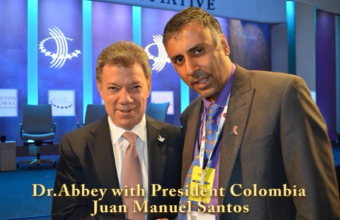
Juan Manuel Santos Calderón, President of Colombia Speaking about Climate Change @ CGI

Juan Manuel Santos Calderón is the 32nd and current President of Colombia, in office since 2010. He was Minister of Defense from 2006 to 2009.

An economist by profession and a journalist by trade, Santos is a member of the wealthy and influential Santos family, who from 1913 to 2007 were the majority shareholders of the El Tiempo newspaper until its sale in 2007 to Planeta DeAgostini. Shortly after graduating from the University of Kansas, he joined the National Federation of Coffee Growers of Colombia as an economic advisor and delegate to the International Coffee Organization in London, where he also attended the London School of Economics and Political Science. In 1981, he was appointed deputy director of El Tiempo, becoming its director two years later.

In 1991, he was appointed by President César Gaviria Trujillo as Colombia’s first Minister of Foreign Trade. Santos worked in expanding international trade with Colombia, and worked in creating various agencies for this purpose including: Proexport, Bancoldex, and Fiducoldex. In 2000, he was appointed by President Andrés Pastrana Arango as the 64th Minister of Finance and Public Credit.

Santos rose to prominence during the Administration of President Álvaro Uribe Vélez. In 2005, he co-founded and led the Social Party of National Unity (Party of the U), a liberal-conservative party coalition that backed the policies of President Uribe, successfully supporting his attempt to seek a Constitutional reform to be able to run for a second term. In 2006, after Uribe was re-elected, and the Party of the U won a majority of seats in both chambers of Congress, Santos was appointed Minister of National Defence, and continued defending the security policies of President Uribe, taking a strong and forceful stance against FARC and the other guerrilla groups operating in Colombia. He oversaw rescue operations of hostages, including Operation Jaque that led to the rescue of former presidential candidate Íngrid Betancourt, three American citizens, and 11 other members of the Colombian Army that had been held for several years. Though widely viewed as a heroic endeavour that cemented Santos’ popularity, the rescue was criticised for misappropriating emblems of the International Red Cross, a violation of the Geneva Conventions.

Future of Climate Summit (FOCS) Positive Futures Enabled by AI-NYC 2024

BY: Art Campomanes Staff Writer for World Liberty TV The PDIE (Purpose Driven Innovation Ecosystem) Group known as the No1 Earthshot Prize nominator, and Venionaire Capital, a leading global investment company based in Vienna, Austria, are proud to announce. “The Future of Climate Summit VOL II”, a prominent event that will bring together distinguished solution...
Read more
The Future of Climate Summit, (FOCS) at the prestigious Denton’s Law Firm-2023

BY: Liliana Rocio, Senior Editor for World Liberty TV Future of Climate Summit” The Nexus of Innovation and Capital Upcoming forum will foster solutions working toward a beautiful future of climate reform. The Purpose Driven Innovation Ecosystem (PDIE) Group, the No. 1 Earth shot Prize nominator, and Sublime Communications, a leading communication agency known for driving hyper-growth,...
Read more

The Global Wellness Summit (GWS) Media Trend & Wellness Report-2026

The Global Wellness Summit (GWS) today released its annual Future of Wellness report, the longest-running, most detailed (150-page) forecast of the big ideas that will transform health and wellness in the coming year.

There have been more shakeups in the wellness market in the last couple of years than in the last 20. The market has been rewritten by high-tech, medical, hyper-optimizing approaches—from the boom in longevity clinics to the avalanche of diagnostics and wearables. At the same time, powerful new desires for a no-tech, deeply human, social and emotional wellness are raging. These polarities, which now define the wellness market, resonate across the new report.

2026 will be another year of shakeups. A year of corrections and backlashes, a crucial year for women, one where longevity moves in new directions, and where major environmental and human crises are tackled.

Four Themes for 2026: 1) an Over-Optimization Backlash: The Revenge of the Human: The backlash against stressful, high-tech wellness will reach activist levels. Wellness experiences will embrace what humans actually are: imperfect, emotional, relational and sensory—and hardwired to seek pleasure and joy. Offerings will pivot to meaning over measurement, catharsis over clinical data, self-expression over self-surveillance.

“The Over-Optimization Backlash” serves as the framing trend, detailing the many ways we’ll move beyond performance to sensation, emotional repair and embodied care. “The Festivalization of Wellness” explores a rising wave of healthy, cathartic wellness raves and gatherings, where music, dance and creative expression mean wild, collective and emotional release.

If fragrance has long been about status, celebrity and corporate sameness, the “Fragrance Layering” trend predicts that the ancient art of combining scents will get a modern reimagining: fragrance as a creative, cultural and deeply personal language.

2.The Year of Women: Major gender inequities in multibillion-dollar markets will get corrected. If the booming longevity market was built for men, “Women Get Their Own Lane in Longevity” goes in depth on how the future is female.

Because women age very differently, with the ovary acting as “command central” of women’s health, longevity will pivot to women’s health span, requiring a whole new longevity paradigm and diagnostics and interventions targeted for every life stage. If men have owned sports, “Women & Sports: The Revolution Continues” details how the women’s sports economy is at its long-awaited tipping point, with a boom in new leagues and female fandom, female athletes as marketing powerhouses, and women globally turning from lonely fitness to empowering sports.

3.Longevity Expands in New Directions: Longevity will move in other bold directions. “Longevity Residences” investigates how it’s moving out of clinics and resorts and into the home, with a new wellness real estate category that supports longer, healthier lives through preventive medicine and diagnostics, biohacking, AI-enabled health tracking and more.


“Skin Longevity Redefines Beauty” argues that the traditional focus on anti-aging is shifting. Innovations in skin longevity and regeneration will introduce a new era of beauty that merges cutting-edge biotech, AI, skin diagnostics and new active ingredients.

4.Wellness Tackles Major Environmental and Human Crises: In our age of multiple crises, from terrifying climate events to brains barraged by bad news, crisis management becomes a pillar of wellness.

“Ready Is the New Well” predicts that if wellness always promised prevention, the next wellness wave is about survival itself, where having a disaster plan becomes as essential as having a fitness plan.

“Tackling Micro plastics as a Human Health Issue” provides a deep scientific overview of how micro plastics are present throughout the human body and increasingly linked to serious health issues. If we’ve had decades of false wellness “detox” rhetoric, the microplastics threat looks to be real, and in 2026, public health and the wellness market will move from awareness to action.

With modern, digital life keeping our nervous systems in a state of fight-or-flight, “The Rise of Neurowellness” explores how regulating the nervous system is wellness’ next frontier, deploying everything from new consumer neurotech to somatic practices to calm our nervous systems before breakdown occurs.

This is the only wellness trends report based on insights from hundreds of health and wellness experts that gather each year at the Global Wellness Summit. Each trend is packed with new ideas, sub-trends and examples of the companies blazing these new trails.

Amway is the exclusive sponsor of this report. A health and wellbeing company founded in 1959, Amway has a presence in more than 100 countries and territories around the world.

“Each year, The Future of Wellness report delivers essential insights into the forces reshaping the global wellness landscape,” said Amway chief marketing officer Melodie Nakhle.

“As the exclusive sponsor, we remain committed to advancing credible, science-driven innovation that helps people lead healthier, more vibrant lives. This research strengthens our ability to deliver meaningful solutions for communities around the world.”

Top 10 Wellness Trends  1.Women Get Their Own Lane in Longevity: Men have dominated the longevity market, but the future is female The booming longevity market—like medicine before it—is tacitly male: women’s path to health is extrapolated from men’s data and protocols designed for men. That era is ending. Research mounts that women age fundamentally differently, with the ovary functioning as “command central” for women’s health, and its decline (aka menopause) dramatically accelerating systemic aging in women.

This leads to a cascade of conditions women suffer far more and longer: from immune disorders to dementia to osteoporosis. Men suffer no such “gonadal death” and stark “before” and “after” health decline.

Slowing/stopping ovarian decline will be the next big biotech breakthrough, and women scientists are busy working on it, from ovarian stem cell therapies to tackling ovarian fibrosis. And with the new framework that “ovary-span” is the lynchpin to women’s health span, the wellness market will now move beyond managing menopause symptoms to tackling ovarian aging and its specific health fallouts. This requires a new longevity paradigm: interventions tailored to women across every decade (from their 20s to 90s), ovarian aging tests becoming the new vital sign, hormone replacement therapy boomeranging back as longevity medicine, lifestyle interventions that best preserve ovarian reserve—with strength training reframed as a non-negotiable for women’s longevity.

The trend details how basically every wellness market is now pivoting from treating menopause to more serious whole-life, medical-wellness longevity programs for women: wellness resorts, longevity clinics, big telehealth and women’s platforms, gyms, diagnostics and wearables. And as women finally shape longevity, its “bro” culture will change, too: less ultrahuman optimization; more human approaches.

2 The Over-Optimization Backlash: Pushing back on peak wellness, we’re living through a modern wellbeing paradox: never before has health been so measurable— and never before has had it felt so psychologically demanding. Sleep is scored, glucose is graphed, aging is tracked, and wellbeing has shifted from something we feel to something we perform correctly.

Therapists warn that data-driven wellness can tip from motivation into fixation, turning insight into pressure. As health data multiplies, many experience analysis paralysis rather than clarity, overwhelmed by constant self-tracking and fear of “getting it wrong.”

While longevity research, diagnostics and health technology have undeniably expanded human potential, optimization without integration is proving costly. The over-optimization backlash marks a decisive cultural pivot away from peak wellness and toward something far more human.

In response, the fastest-growing spaces in wellness are prioritizing nervous-system safety, emotional repair and pleasure over metrics: social saunas are growing around the world as ritual, not endurance; brands like On and Nike are ditching performance language for campaigns about softness, presence and joy; clinics are reframing aesthetics as psychological care rather than correction; and new technologies are quietly regulating the body in the background, without dashboards or demands.

From scream circles and somatic release classes going viral on TikTok, to pleasure-forward food, low-stimulation retreats and regulation-focused wearables, the trend is evident: wellness is no longer about optimizing harder—it’s about feeling safer, more connected and more alive.

3 The Rise of Neurowellness, Regulating the nervous system is the next frontier of human health: Neurowellness is moving from niche to mainstream as people realize one of their biggest health bottlenecks isn’t willpower, its nervous system overload.

Sleep has become the on-ramp. Wearables turned a private struggle into a daily metric: “What’s your sleep score?” When scores stay low, the message is clear: the autonomic nervous system is stuck in low-grade fight-or-flight, showing up as fragmented sleep, anxiety, inflammation, brain fog, hormonal disruption and burnout.

That visibility is driving a wave of interventions that go beyond supplements and mindset. “Hard-care” neurowellness is arriving through consumer-friendly neurotech: vagus nerve stimulation devices like Pulsetto, EEG-guided sleep tools like Elemind and neurofeedback platforms like Myndlift that bring nervous system training into therapists’ offices, not just homes.

Flow’s recent FDA approval for an at-home neuromodulation device adds clinical momentum, signaling a path to reimbursement and wider adoption. At the same time, long-standing “soft-care” wellness anchors are being re-framed as nervous-system medicine: breathwork, touch therapy, yoga and Feldenkrais are increasingly recognized for their measurable effects on regulation, making them more mainstream, more repeatable and, in some settings, even prescribed.

Next, expect brain–body research, including Stanford’s focus on whole-system connections, to push neurowellness into everyday spaces: mental health care, local fitness studios, hospitality, real estate and next-gen destination spas and clinics—making regulation a quietly built-in feature of modern life.

4.Fragrance Layering, The new art of combining scents to create unique personalized identities: Fragrance layering—the art of combining scents to create a personalized olfactory signature—is changing the way we express ourselves, shape our moods and interact with others. Once associated mainly with luxury and seduction, fragrance is re-emerging as a cultural and emotional language, echoing ancient traditions from Egypt, Arabia and India, where scent signified ritual, status and meaning.

Today, Gen Z and Millennials are reviving this heritage through experimentation, fueled by TikTok, indie fragrance communities and brands like Kayali and Rare Beauty that encourage mixing, mood-shifting and the creation of “fragrance wardrobes.”

This rise of “smellmaxxing” coincides with experimental cocktailing, social-coded scents and layering workshops, which transform fragrance into a participatory, skill-based hobby. Layering is extending beyond personal fragrance into spaces and experiences, with environments crafted to carry evolving aromas that shape mood and ritual.

Technology is amplifying this, as smart fragrance systems and AI tools allow scents to shift dynamically throughout the day, responding to activity, context or emotional state. In an era of homogenous beauty products, fragrance layering offers both creative freedom and social currency—a way to express identity, foster connection and reclaim individuality through scent.

5. Ready Is the New Well Preparing for climate disaster is the new preventative wellness: Wellness has always promised protection—from disease, from burnout, from the slow erosion of mental health. But the next wave of wellness will promise something different: survival itself. Just as preventive medicine once transformed healthcare, disaster readiness is becoming the next evolution of everyday resilience, where having a disaster plan is as essential as having a fitness plan.

This shift connects mental health, physical readiness and community interdependence into one continuum of care. The implications for the global wellness economy are vast. Gyms and fitness studios will double as emergency shelters; wellness retreats will teach readiness; and demand for disaster-proof architecture will surge.

But perhaps the greatest opportunity lies in the industry’s ability to hold both sides of the psychological spectrum at once—supporting people who live in chronic fear of what might happen, while also caring for those navigating the emotional fallout of what already has. As disasters become inescapable, the most forward-thinking companies will prioritize practical, proven solutions that put people’s minds at ease.

6.Skin Longevity Redefines Beauty Move over anti-aging: innovations in skin regeneration usher in a new era: A transformation is sweeping the beauty and wellness industries as “anti-aging” is rapidly being replaced by the concept of skin longevity.

This emerging vertical merges cutting-edge biotech, proactive skincare and holistic wellness, reframing the conversation from reversing the unwanted effects of time to optimizing the skin’s health and function over the long term.

Skin longevity honors skin as the body’s largest organ and a key marker of overall health. It’s driven by demographic realities—people are living longer and seeking solutions to maintain long term health and vitality—and by a philosophical shift, treating skin as a diagnostic tool and reflection of overall health.

The movement is gaining significant momentum, backed by major investments and deep scientific research. Advances include sophisticated skin diagnostics, such as L’Oréal’s Cell BioPrint, and the development of new active ingredients and regenerative treatments. These innovations are creating a new age of personalized, preventative care.

The trend extends beyond the face to encompass “hair longevity,” with a focus on scalp health and regenerative therapies for hair. Industry experts concur that skin longevity is a defining turning point in beauty and wellness, where the cross-pollination of science, biology and technology is unlocking unprecedented horizons for personalized, visible results and long-term health optimization.

7.The Festivalization of Wellness, A new wave of healthy, wild, cathartic wellness raves and gatherings: A new wave of group wellness events is reshaping the global wellness landscape, marking the rise of the “festivalization of wellness.” These gatherings respond to widespread economic stress, social fragmentation and digital overload by prioritizing human connection, collective energy and emotional release. Inspired by festival and rave culture, wellness raves, sober morning dance events and multi-day immersions are reframing wellbeing as experiential, social and identity-driven rather than prescriptive or perfection-oriented.

Spanning movement, music, sauna culture, learning and creative expression, they emphasize participation over performance and lower barriers to entry by creating judgment-free spaces where people explore what intuitively feels good.

Around the world, sober morning raves, grief raves and headphone-led somatic dance experiences like Sanctum are turning dancefloors into spaces for emotional release, connection and catharsis. At the same time, mass-participation fitness festivals such as Hyrox attract hundreds of thousands of athletes and spectators to sweat, celebrate and heal together. Luxury resorts from Six Senses and Soneva to SHA Wellness are now hosting immersive multi-day wellness festivals, while mainstream music events like Wilderness, Lost Village and Envision are embedding breathwork, rituals and recovery zones into their lineups.

The result is a global shift where wellness becomes social, expressive and identity-shaping—built on joy, belonging and shared experience rather than discipline and optimization. By making wellness playful, inclusive and culturally relevant, the festivalization of wellness is redefining health as belonging, connection and sustainable joy.

8.Women and Sports: The Revolution Continues, More women become empowered as athletes as the women’s sports economy booms: This trend captures a long-overdue cultural and economic reckoning as women’s athletics moves from the margins to the mainstream—reshaping fitness, media, fashion, fandom and business along the way.

Around the world, new leagues like the Professional Women’s Hockey League, League One Volleyball and the upcoming Women’s Professional Baseball League are launching alongside bold, culture-forward events such as Athlos in New York City, which turned women’s track and field into a Times Square spectacle complete with instant prize payouts and a Ciara concert.

Female fandom is exploding too, visible in the rapid rise of women’s sports bars like The Sports Bra (now franchising nationwide), record-breaking attendance at the 2025 Women’s Rugby World Cup and massive global viewership for women’s cricket in India.

At the same time, female athletes are becoming cultural and commercial powerhouses: Coco Gauff co-creating fashion lines, Ilona Maher and Sloane Stephens launching beauty brands, Allyson Felix building a motherhood-centered footwear company, and media platforms like Togethxr rewriting who gets visibility and voice.

On the ground, this momentum is changing bodies and behaviors—women are lifting heavier, joining grassroots leagues, filling women-only gyms from Dubai to Shanghai, and embracing strength over thinness as both a physical and political act. Together, these shifts signal a structural change, not a moment: women’s sports are no longer asking for permission, but actively redefining what power, performance and possibility look like—on the field, in culture and across the global wellness economy.

9.Tackling Microplastics as a Human Health Issue, We’ve grasped the severity of the microplastics crisis; this year is about action: Microplastics have crossed a critical threshold—from an environmental problem to a direct human health concern. Once associated mainly with oceans and wildlife, these microscopic particles are now being detected in human blood, lungs, placentas and even the brain.

Each year, an estimated 130 million metric tons of plastic enter the environment, breaking down into particles we ingest through bottled water and packaged food, inhale from synthetic clothing fibers in household dust, and absorb through everyday consumer products. Early research links this exposure to inflammation, hormonal disruption, cardiovascular disease and potential cognitive effects.

As concern grows, the wellness and medical sectors are moving from observation to intervention. In London, private clinics are already offering costly treatments claiming to reduce microplastic loads in the body, while consumer-facing innovations such as plastic-free underwear are also emerging. Looking ahead, microplastics may become a routinely measured health marker—tracked alongside cholesterol or inflammation—and plastic exposure a factor shaping architecture, fashion, food systems and healthcare.

The challenge now is not awareness, but whether society acts quickly enough to reduce exposure at the source, before the smallest pollutants create the largest health legacy.

10.Longevity Residences, Healthspan finally comes home: A new category of “longevity residences” is emerging within wellness real estate, designed to support longer, healthier lives. This trend signals a major shift in how—and where—longevity is delivered, as real estate becomes an active participant in extending healthy life rather than a passive backdrop.

Around the world, a new generation of longevity-focused communities is embedding preventive medicine, advanced diagnostics, biohacking and AI-driven personalization directly into daily living.

The Estate is building a global network of residences where architecture, circadian lighting, diagnostics and concierge medicine operate as a continuous longevity system; Australia’s Elysium Fields has plans to pair luxury living with on-site MRIs, brain scans and anti-ageing clinics; Velvaere in Utah will integrate Fountain Life’s early-detection diagnostics into its ski-in, ski-out community; and Tri Vananda in Thailand is blending medical longevity science with holistic design, biophilia and multigenerational living.

Unlike traditional wellness real estate, these residences go deeper—tracking biomarkers, personalizing care over decades and removing friction from proactive health behaviors. Fueled by an aging global population, soaring investment in longevity tech and the rise of concierge medicine, longevity residences reflect a growing realization that true healthspan gains happen at home, not during one-off clinic stays. For culture and capital alike, the message is clear: longevity is no longer a service you visit—it’s a lifestyle you live in, and the home is becoming the most powerful longevity tool of all.

It was a very well attended event, people from all over the world were in attendance to be part of this wonderful event. Even a delegation from Bangkok, Thailand came to be part of this wonderful event.

Global Wellness Economy: 2026 Country’s ranking report, was presented by Joanne Hopkins, research fellow, of Global Wellness Institute.

The Future of Wellness 2026 Trends Report, was shared by the dynamic duo, Beth McGroarty, VP, research & forecasting, for Global Wellness Summit and Global Wellness Institute and Jane Kitchen, media and Trends Analyst, at Global Wellness Summit, distinguished Trend Authors.

There were many panels titled: In Pursuit of Wellness: Mining the authority of the GWI, Intentional spaces roadmap: 2026 collaboration with GWI, Standing the watch for Global wellbeing.

Some of the Speakers in person and virtual included: Richard Carmona, MD, 17th US Surgeon General; chief of health innovation, canyon ranch, Ms. Somjai Taphaopong, Consulate General of Thailand in New York., and so many more dynamic speakers in attendance from around the world.

Some high level dignitaries included: Bev Maloney-Fischback Founder & CEO Organic Spa Media, Sammy Gharieni, Founder and CEO of Gharieni Group, Mickey Beyer-Clausen, Co-Founder & CEO TIMESHIOFTER, and so many more.

At the closing remarks, Mrs. Susie Ellis, Chair and CEO, GWS & GWI, Recognized, Ms. Nancy Davis, Chief Creative officer & Executive Director, GWS & GWI, for the great work she has done for many years and organizing events worldwide, alongside here staff members.

The Future of Wellness 2026 Trends Report [Digital Copy] can be downloaded here:

About the Global Wellness Summit: The Global Wellness Summit brings together leaders and visionaries to positively shape the future of the $6.8 trillion global wellness economy. In addition to an annual conference, held at a different location around the globe, GWS also hosts annual in-person events such as the Wellness Real Estate & Communities Symposium and the Beauty & the Brain Symposium, along with virtual gatherings, including Wellness Master Classes and Wellness Sector Spotlights.

The organization’s Future of Wellness report forecasts the top wellness trends for the year ahead and is oft-quoted in the media. The 20th annual Global Wellness Summit will be held in Phuket, Thailand, November 10-13, 2026.

See more about Wellness, Health and Beauty in our World Liberty TV, Wellness, Health, and Beauty Channels by clicking here.

2026 New York Media Event by GWI Wellness Trends & Country Rankings-2026

BY: Liliana Rocio, Senior Editor for World Liberty TV The Global Wellness Summit (GWS) today released its annual Future of Wellness report, the longest-running, most detailed (150-page) forecast of the big ideas that will transform health and wellness in the coming year. There have been more shakeups in the wellness market in the last couple...
Read more

15th Annual New York Produce Show-2025

In addition to the 1-day Trade Show are three co-located conferences for those wishing to expand and enhance their visit to our one-of-a-kind produce industry experience.

Tuesday, the Foundational Excellence program – with Cornell professors offering one day of industry trends and take-aways for executives with less than 5 years in produce

Also Tuesday, the Global Trade Symposium offers attendees the latest insights on produce importing and exporting to and from the Northeast Region.

Wednesday, our 1-day Trade Show and Exposition, featuring our Opening Keynote Breakfast, show floor educational Micro-Sessions, Chef’s Demonstrations, and the Connect with Fresh Media Immersion.

Thursday, the “Ideation Fresh” Foodservice Forum covers the role of produce in culinary innovation and foodservice profitability.

More than two dozen prominent leaders in fresh produce   discussed the state of imports, exports, logistics and seed development – as well as politics and tariffs – during Global Trade Symposium at the New York Produce Show and Conference.

The annual gathering, took place on Tuesday, Dec. 2, at the Sheraton New York Times Square hotel, and feature six sessions devoted to the trade of fresh fruits and vegetables coming into and out of the United States and Canada.

The first three, including “Politics and Produce, A Global Discussion,” covered  the roller-coaster economic environment impacting the supply chain, as well as innovative ideas to ensure future growth for businesses.

“The procurement, movement and promotion of fresh produce by nature can be volatile, even in the best of economic climates,” says Ken Whitacre, CEO and President of the New York Produce Show and Produce Business magazine. “We are grateful to have such an astute group of speakers tackling critical issues head on and presenting strategic ways of solving them.”

The Symposium is the first of five major educational components of the 2025 show, which is celebrating its 15th anniversary.

Cornell University Professor Miguel Gomez kicked off the day with an overview of the global market before the panel moderated by Tom Stenzel digs into the impact of politics and policy on produce.

Key leaders whose interests span North, Central and South America – Jessie Capote (J&C Tropicals), Ron Lemaire (CPMA), John Pandol (Pandol Bros.), Chuck Zeutenhorst (FirstFruits Farms) and Fernando Cruz Morales (GCMA) – discussed  the ever-shifting landscape and provide a look at the future for fresh produce.

Continuing the theme, four panelists in the “Navigating Turbulence in Transportation and Logistics” session led by moderator Anthony Serafino (EXP Group), discussed how to preserve and improve cold chain movement of produce amid the tough economic climate.

Mike Laws (Laws Logistics), Jai Thakrar (Jalaram Fruit), Florent Philippot (Z Group USA) and Tony Martinez (Primo Trading Services/Pharr International Bridge) discussed  how companies can remain resilient amid labor shortages, tariffs and weather events by leaning into automation, AI and smart business strategies.

The father-and-son team of David and Jonah Stillman, who have gained acclaim addressing the behaviors and habits of Generation Z, were the keynote speakers at the 2025 New York Produce Show and Conference in Manhattan.

2025 Consumer Media Lunch program: By invitation only and specifically for consumer media, this workshop and lunch brings together influential business journalists, writers, bloggers, registered dietitians and food and culinary experts to help them learn more about the produce world and efforts to increase produce consumption.

This year’s luncheon   focused on the Next Gen (Z and Alpha), their eating habits and how the produce industry and consumer media can cover health, nutrition and fresh consumption.

Wildly successful last year, the program also will feature demos and products that appeal to younger generations.

They had an insightful program along with a fantastic line-up of sponsors whose products were showcased in the Guided Tasting: Dole Fresh Fruit, Fresh Gourmet Company, Crunch Time Apple Growers, California Walnuts and Katzman Produce.

Close to 300 Vendors were exhibiting and showcasing there produce on the exhibit floor, vendors in attendance from all over the world, which included, Sunkist, Green Giant, Hunt’s Point Produce Market, Avocados from Mexico, Dole food Company, Wonderful Sales and so much more. See more in our World Liberty TV, Food Channels and blogs by clicking here.

15th Annual NY Produce Show-2025

By: Lidia Evita, Staff Writer for World Liberty TV The Eastern Produce Council and PRODUCE BUSINESS magazine present an exciting world-class event for the industry. The 3-day event includes networking opportunities, a one-day trade show of 300 exhibitors, Opening Keynote Breakfast, educational micro-sessions and tours of the region’s vibrant industry, including local retailers, wholesalers, foodservice...
Read more

Clinton Global Initiative (CGI) 20th Anniversary Sept 24-25 –NYC 2025

BY: Liliana Rocio, Senior Editor for World Liberty TV Top Global and Industry Leaders Convened at the Clinton Global Initiative. As CGI marks its 20th anniversary, the 2025 Annual Meeting has been reimagined to drive action on urgent global challenges, around the theme of “What’s Next”. Featured participants announced today. include Noubar Afeyan, Founder and...
Read more

Clinton Global Initiative (CGI) 20th Anniversary-2025

Top Global and Industry Leaders Convened at the Clinton Global Initiative. As CGI marks its 20th anniversary, the 2025 Annual Meeting has been reimagined to drive action on urgent global challenges, around the theme of “What’s Next”.

Featured participants announced today. include Noubar Afeyan, Founder and CEO, Flagship Pioneering; Co-Founder and Chairman, Moderna; Matt Damon, Co-Founder, Water.org and WaterEquity; Anthony Capuano, President and CEO, Marriott International; Cindy McCain, Executive Director, World Food Programme; Hamdi Ulukaya, CEO and Founder, Chobani; Abigail Disney, Filmmaker, Writer, Philanthropist, and Activist; Ryan Gellert, CEO, Patagonia; Audrey Tang, Cyber Ambassador, Taiwan; Wendy Abrams, Co-Founder and CEO, Eleven Eleven Foundation; Donna Karan, Founder, Urban Zen Foundation; Katherine Maher, President and CEO, NPR; Neil Buddy Shah, CEO, Clinton Health Access Initiative; and more.

Today, the Clinton Global Initiative (CGI) announced more leaders from across business, government, philanthropy, and civil society, convening at the CGI 2025 Annual Meeting September 24-25, uniting around this year’s theme of “What’s Next.”

These leaders are poised to take action to confront new and worsening challenges on climate, health, the economy, humanitarian response, democracy and human rights, truth and information, education, and innovative finance.

This year marks the 20th anniversary of CGI. Since 2005, more than 500 million people in more than 180 countries have had their lives improved by more than 4,000 Commitments to Action launched through CGI.

Last month, in a letter marking CGI’s 20th anniversary, President Clinton issued a stark call to action to the CGI community, outlining changes to this year’s meeting.

“Given the scope of the challenges we face, this year’s CGI meeting will be different – by necessity. We need to redefine how we show up, how we work, and how we find ways to honor our common humanity.”

To tackle these challenges, the CGI 2025 Annual Meeting is bringing together leaders of major charitable foundations, nonprofits, businesses, governments, unions, and more to chart solutions. Featured participants announced today include:

Global advocates and activists including Stacey Abrams, Founder, American Pride Rises Network; Wendy Abrams, Co-Founder & CEO, Eleven Eleven Foundation; Vedika Bhandarkar, President and Chief Operating Officer, Water.org; Deepak Bhargava, President, Freedom Together Foundation; Matt Damon, Co-Founder, Water.org & WaterEquity; Abigail Disney, Filmmaker, Writer, Philanthropist, and Activist; Lindsay Ell, Artist, Songwriter, and Philanthropist; Dr. David C. Fajgenbaum, Co-Founder, Every Cure; Donna Karan, Founder, Urban Zen Foundation; and Audrey Tang, Cyber Ambassador, Taiwan.

Journalists and leaders across media including Errin Haines, Editor at Large, The 19th; Margaret Hoover, Host, Firing Line with Margaret Hoover, PBS; Andrew Jack, Global Education Editor, Financial Times; Raj Kumar, Founding President and Editor-in-Chief, Devex; Nishant Lalwani, CEO, International Fund for Public Interest Media; Katherine Maher, President and CEO, NPR; Alan Murray, Founding President, The Wall Street Journal Leadership Institute; Matthew Segal, Co-Founder, ATTN; Jessica Sibley, CEO, TIME; Vitus Spehar, Creator, Under The Desk News; and Michael Vito Valentino, Editor-in-Chief, NowThis;

Business leaders including Noubar Afeyan, Founder and CEO, Flagship Pioneering; Co-Founder and Chairman, Moderna; Rima Al Mokarrab, Chair, Tamkeen; Anthony Capuano, President and CEO, Marriott International; Michael Dowling, CEO, Northwell Health; Ryan Gellert, CEO, Patagonia; Lutz Hegemann, President Global Health, Novartis International AG; Joe Kiani, Founder and Executive Chairman, Willow Labs; and Hamdi Ulukaya, CEO and Founder, Chobani.

Philanthropic leaders including Armine Afeyan, CEO, Aurora Humanitarian Initiative; Tonya Allen, President, the McKnight Foundation; DeAngela Burns-Wallace, President and CEO, Ewing Marion Kauffman Foundation; Marla Blow, CEO, Skoll Foundation; Somachi Chris-Asoluka, CEO, The Tony Elumelu Foundation; Kellea Miller, Executive Director, Human Rights Funders Network; Jacqueline Novogratz, Founder and CEO, Acumen; Carmen Rojas, President and CEO, Marguerite Casey Foundation; John-Arne Røttingen, CEO, Wellcome Trust; and Mark Suzman, CEO and Board Member, Gates Foundation.

Civil society and NGO leaders including Manish Bapna, President and CEO, Natural Resources Defense Council (NRDC); Kathy Higgins, CEO, the Alliance for a Healthier Generation; Lisha McCormick, CEO, Last Mile Health; Sania Nishtar, CEO, Gavi, the Vaccine Alliance; Kelley Robinson, President, Human Rights Campaign; Peter Sands, Executive Director, The Global Fund; Neil Buddy Shah, CEO, Clinton Health Access Initiative; Janti Soeripto, President and CEO, Save the Children US.

Government and multi-lateral leaders including U.S. Senator Chris Coons of Delaware; St. Kitts and Nevis Prime Minister Terrance Drew; Tom Fletcher, Under-Secretary-General for Humanitarian Affairs and Emergency Relief Coordinator, United Nations Office for the Coordination of Humanitarian Affairs; Michelle Lujan Grisham, Governor, New Mexico; and Cindy McCain, Executive Director, World Food Programme; and more.

As part of President Clinton’s call to action last month, this year’s CGI Annual Meeting was  reimagined to promote collaboration through Working Groups – facilitated, action-focused sessions where leaders will collaborate with mission-aligned organizations to drive real solutions in the areas that matter most and are under the greatest threat.

These Working Groups included cross-sector collaborations on Climate, Democracy and Human Rights, The Economy, Education, Health, Humanitarian Response, Innovative Finance, and Truth and Information.

Sponsors for the CGI 2025 Annual Meeting include AFT, All Hands & Hearts, Amalgamated Bank, APCO, Aurora Humanitarian Initiative, Bob and Jane Harrison, Cure, Doha Forum, Equity Group Holdings Plc, Flagship Pioneering, Former Congressman David Trone, Gilead Sciences, Inc., Integra Capital, Interenergy Group, John S. and James L. Knight Foundation, Kokoro, MEBO International, Northwell Health, Pfizer, Pinterest, Sino-European Manufacturing Club, Strauss Media Strategies, Inc., Tarsadia Foundation, The EKTA Foundation, The John D. Evans Foundation, The Kiani Foundation, The Marc Haas Foundation, Ukraine Children’s Action Project, Varkey Foundation, and W.K. Kellogg Foundation. Postcode Lottery Group is serving as a partner for the CGI 2025 Annual Meeting. Devex and Grist are media partners for the CGI 2025 Annual Meeting.

To mark the Clinton Global Initiative’s 20th Anniversary, Social Goods — a purpose-driven small business — and the Clinton Foundation are partnering to unveil a new, limited-edition collection where every item sold supports Foundation programs that advance solutions on economic opportunity, climate, public health, gender equality, and more.

About the Clinton Global Initiative (CGI): Founded by President Bill Clinton in 2005, the Clinton Global Initiative is a community of doers representing a broad cross section of society and dedicated to the idea that we can accomplish more together than we can apart.

Through CGI’s unique model, more than 10,000 organizations have launched more than 4,200 Commitments to Action — new, specific, and measurable projects and programs – that are making a difference in the lives of more than 500 million people in 180 countries.

Find information on all 106 Commitments to Action announced at CGI 2025 at clintonglobal.org by clicking here.

It was our 16th Annual apprecance, covering the opening of CGI in 2005, we have been meeting and seeing the great people work in hand in hand helping people on top of people.

President Clinton has done so much for humanity through his CGI, in the 20th years, touching close to 500 million people worldwide, just take a step back and think about what has been done here.

I personally am a very big fan of CGI and a supporter, by contributing videos and blogs through our World Liberty TV, Humanitarian Channels and Blogs.

We would go as far as to say, President Clinton, is the Gandhi of this Era, for the what he is doing with his CGI. Truly a great man, caring about people and helping them through his contacts, year in and out.

See more about Clinton Global Initiative (CGI) 20th Anniversary Sept 24-25 –NYC 2025, in our World Liberty TV, Humanitarian Channels and blogs by clicking here.


(GRIA) Launches in New York with Manifesto for Regenerative Futures- 2025

BY: Atul Kapoor Staff Writer For World Liberty TV. Global Regenerative Innovation Alliance (GRIA) Launches in New York with Manifesto for Regenerative Futures. The Future of Climate Summit VOL. III made history today with the Founding Assembly of the Global Regenerative Innovation Alliance (GRIA), hosted at Denton’s in Midtown Manhattan during Climate Week NYC. Over...
Read more

NY Pride Parade NYC-2025

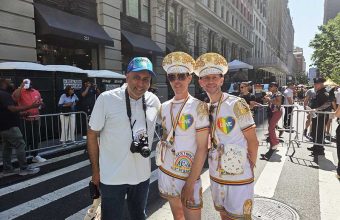
BY: Adal Hussain, Chief  Editor. 25th St 5th Ave NYC  June 29th 2025

NYC Pride | Heritage of Pride, a longtime national leader in LGBTQIA+ Pride organizing and advocacy, announces its official theme for 2025.

“Rise Up: Pride in Protest.” As the LGBTQIA+ community faces increasing hostility and legislative attacks, this year’s theme is a reflection of the Pride movement’s origins in protest—and is a powerful call to action for our communities and allies to rally and march in defiant celebration, advocacy and solidarity.

“Rise Up: Pride in Protest” meets the moment before us and honors the legacy of the first Pride March in 1970, which commemorated the one-year anniversary of the Stonewall Riots.

“This year, more than ever, we acknowledge that Pride can be celebrated in many ways, but at the heart of our mission, we recognize that we must also remain steadfast in protest,” said Kazz Alexander, NYC Pride Co-Chair.

“The challenges we face today, particularly in this political climate, require us to stand together in solidarity. We must support one another, because when the most marginalized among us are granted their rights, all of us benefit.

The NYC Pride 2025 calendar includes the annual NYC Pride March, among the largest LGBTQIA+ Pride marches worldwide, and PrideFest, the largest LGBTQIA+ street festival in New York, on Sunday, June 29.

NYC Pride also offers a diverse array of year-round opportunities to gather through our Pride365 programming, ensuring that our activism and community impact extends beyond the month of June.

NYC Pride had many events in 2025 and Grand Marshals, who embody the spirit of resilience and activism during Pride Month and beyond.

NYC Pride’s 2025 Pride Gives Back grant awards, which support local nonprofits and initiatives serving the LGBTQIA+ community, will also be announced soon.

NYC Pride is made possible through the support of community members and allies. To sustain our mission and continue advocating for LGBTQIA+ rights.

Many political leaders were in attendance, which included Governor Kathy Hochul, Attorney General Letitia James , Zohran Mamdani , NYC Democratic Mayoral Candidate, New York City Comptroller, Thomas P. DiNapoli, New York City Public Advocate, jumaane williams, Council Members, Senators and many more community leaders .

Jessica Tisch, New York City Police Commissioner, alongside Det. Brian Downey, Gay Officers Action League to protest NYC Pride March over uniform disagreement.

GOAL wants to participate in the March while wearing their full police uniforms, which means carrying concealed firearms.

Heritage of Pride, the nonprofit that organizes NYC Pride, says that goes against the weapon policy for the Pride March and offered a compromise – letting GOAL march in uniform but without carrying their service weapons.

“Members of our organization and our community feel that we need to be safe in the March and in the space that we are inhabiting together. That means no weapons,” Heritage of Pride co-chair Kazz Alexander said in a statement.

See more about NY Pride Parade Heritage of Pride, NYC-2025, in our World Liberty TV, Political Channels, Blogs by Clicking here.

NY Pride Parade Heritage of Pride, NYC-2025

BY: Liliana Rocio Suarez Salcedo, Senior Editor. @ 25th St 5th Ave NYC  June 29th 2025 NYC Pride | Heritage of Pride, a longtime national leader in LGBTQIA+ Pride organizing and advocacy, announces its official theme for 2025. “Rise Up: Pride in Protest.” As the LGBTQIA+ community faces increasing hostility and legislative attacks, this year’s...
Read more